

Andrea Teceros Hans was born and raised in La Paz, Bolivia. Decades of local feminist activism led her to MSI Bolivia, where she now works with indigenous communities and young people.
In her own words:
When I was younger, I was bursting with questions. I wanted to know about my body, and why girls were treated differently from boys, but no one ever told me the truth. When I asked my parents how babies were made, I was told that a man put an egg in a woman when they kissed. Not only did that lead me to believe that women laid eggs like chickens, but I cried every day for a month after my first kiss because I thought I might be pregnant.
As I became an adult, I found myself gravitating towards the feminist movement. I found friendship with other women and girls who, like me, had been hurt or disregarded in some way, and wanted to fight for a better future.
Ten years ago I started a grassroots organisation, Women in Resistance, that discussed topics that few people in Bolivia dared to – bodily autonomy, abortion, sex, pleasure, gendered violence, justice for women.
I wanted to be the adult I never had when I was growing up. To help young people understand the world, their bodies and choices, to stop them from being isolated and confused like I once was. So, while I was running the grassroots organisation, I trained to become an educator in comprehensive sexuality education.
When I came to MSI four years ago, I became a bridge between local feminist networks in Bolivia and larger NGOs. My role spans research, advocacy and sex education and I find it cannot be neatly described. It’s a bit like how life can’t be compartmentalised: we are whole beings, facing complex intersecting challenges.
Nothing exemplifies this more than my recent experience supporting an indigenous community in the Amazon. This community was forced inland because of environmental destruction purporting to be “progress”. The river – their life source – had become increasingly contaminated from mining and mercury. They had no money and very little education, and their children were dying young.
A local NGO contacted us to see if we could help this community with family planning. We sprang into action with the help of the local hospital. Upon meeting and working with them, we began to understand their reality. It was important for them to know about their reproductive health but their needs were greater. The women confided in us that they were using old cloths to manage their menstruation and frequently got infections. They struggled for food and clean water.
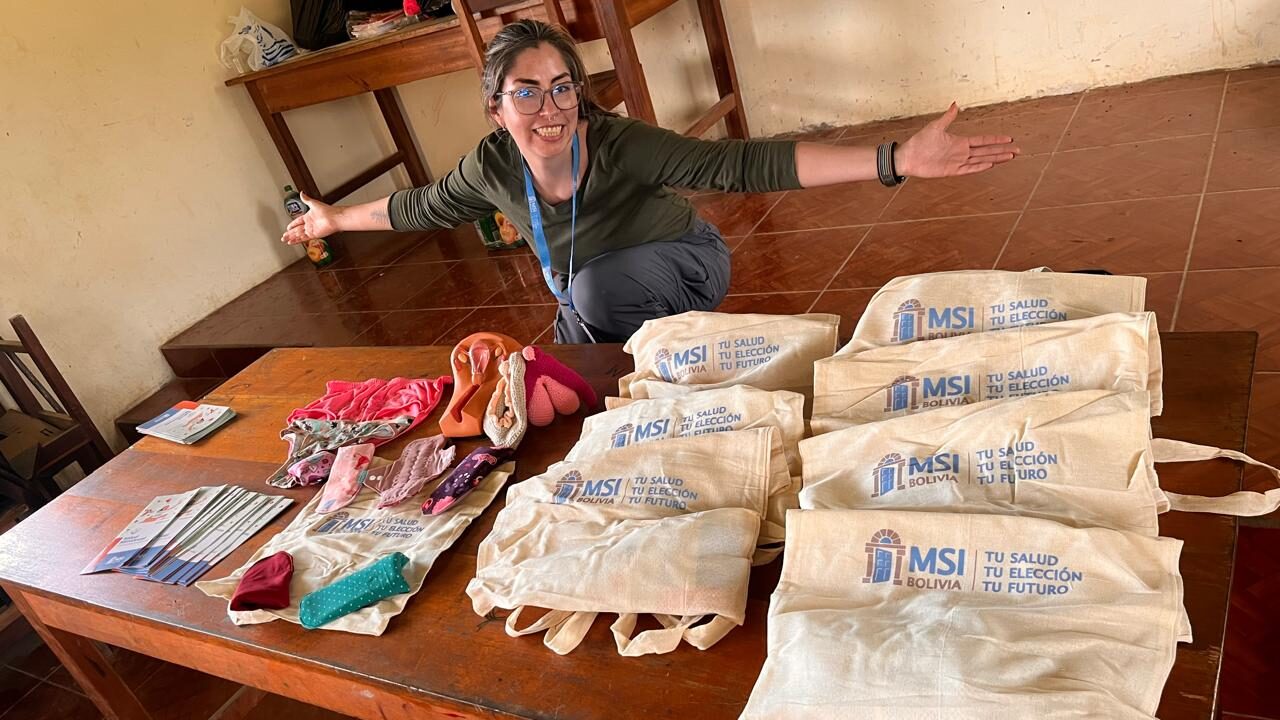
We contacted another organisation who could support them with food. I worked with my colleagues to design a specific programme on menstrual health to bring them the information they’d never had about their bodies, their cycles, family planning, and their right to autonomy, and then we created kits to share with them, with reusable pads and menstrual underwear. When we evaluated the programme, the women told us they were eager to keep learning. I’ll never forget one of them saying that when it came to the world of sex and health, she felt like a crawling toddler, just now learning to walk.
This indigenous community is bearing the consequences of mining, mercury poisoning, poverty, an unrelenting climate crisis. I know their overlapping hardships cannot be easily fixed. But if you had seen the looks on the women’s faces when we told them about their reproductive choices, gave them their menstrual health kits, and connected them to contraceptive care, you would understand why this work fills my heart.
We’ve helped them gain knowledge, which gives them some power to change their reality. These are tools in their toolkit that they can use to build resilience as a community.
Life is complicated, but this is simple: a woman with a choice is one with hope in her step. Anytime I can help a girl or woman understand her body so she can get back some control, I feel like I’m helping to change the world.
Read more about MSI’s advocacy to fight for reproductive rights around the world.