




Three women, links in a chain of an evolving health system
changing the future of reproductive healthcare
In Nigeria, millions of women can’t access modern contraceptive options that would support them to live on their own terms. Making these services available through the public health system is the best option for long-term change.
This is the story of a Nigerian woman, the government nurse who changed her life with contraception, and the MSI trainer who made it possible.
Their lives are interlinked, converging in a public hospital where a partnership behind the scenes is providing better choices for women.
Wemimo
Wemimo is a working parent in her thirties living in Abeokuta, Nigeria. Every minute counts, her energy is a precious resource, and income must be coming in to pay the bills.
It’s 5am when she typically rises. It’s always a scramble to organise her two children to drop them at school at seven. She then heads to her salon to cut and style hair. If she snatches a spare moment, you’ll find her in church. “From my shop to the children’s school to church, that's just me,” she said.
For healthcare, she visits her local public hospital – it’s the closest and best option in her area. Seven years ago, she walked in and chose to get an IUD, a form of long-acting contraception.
She didn’t want another child after her second. With more children she’d have to stretch her limited time and resources. For her, it was more important to focus on the two children she has, to give them their best chance in life.
“I want my children to be more than me. More than their father. More than their relatives. I dream big for them.”
Looking at her life now, she believes that this small, T-shaped device has had an outsized impact on her wellbeing and that of her family.
It’s helped her avoid pregnancy so she could plan and live according to her own timeline and goals.
In rural Nigeria, this isn’t a given.
1 in 5 women want contraception but cannot access it. As a result, there are around 3 million unintended pregnancies each year. Many women are trapped in a cycle of giving birth, without the informed choices they deserve.
Wemimo – with access to quality, long-term contraception locally – considers herself lucky.
“I can relax knowing that I will not be expecting an unwanted pregnancy. As a woman, if you wish to create space between your children, you can create space for yourself as well.”
At this local hospital, Wemimo received information and contraception from a government nurse called Bisola…
Bisola
Government nurse
Bisola is a well-known provider of contraception in this community in Nigeria’s Ogun State, helping up to 30 women like Wemimo each day.
It was 2014 when MSI started its partnership with the hospital where she works. MSI and the local government selected this facility together because of the lack of quality reproductive healthcare in the area.
Bisola recalls what it was like before MSI’s partnership. Options for contraception were limited, with most relying on short-term ones like condoms. The staff weren’t trained or confident on how to counsel clients and offer long-term options. Stocks of contraceptive methods were often depleted.
A range of modern contraceptive methods existed, but challenges were preventing women from accessing them through public healthcare. That’s where MSI came in.
“I was among those in the first training. It improved my skills and my services, my interactions with my clients,” Bisola said.
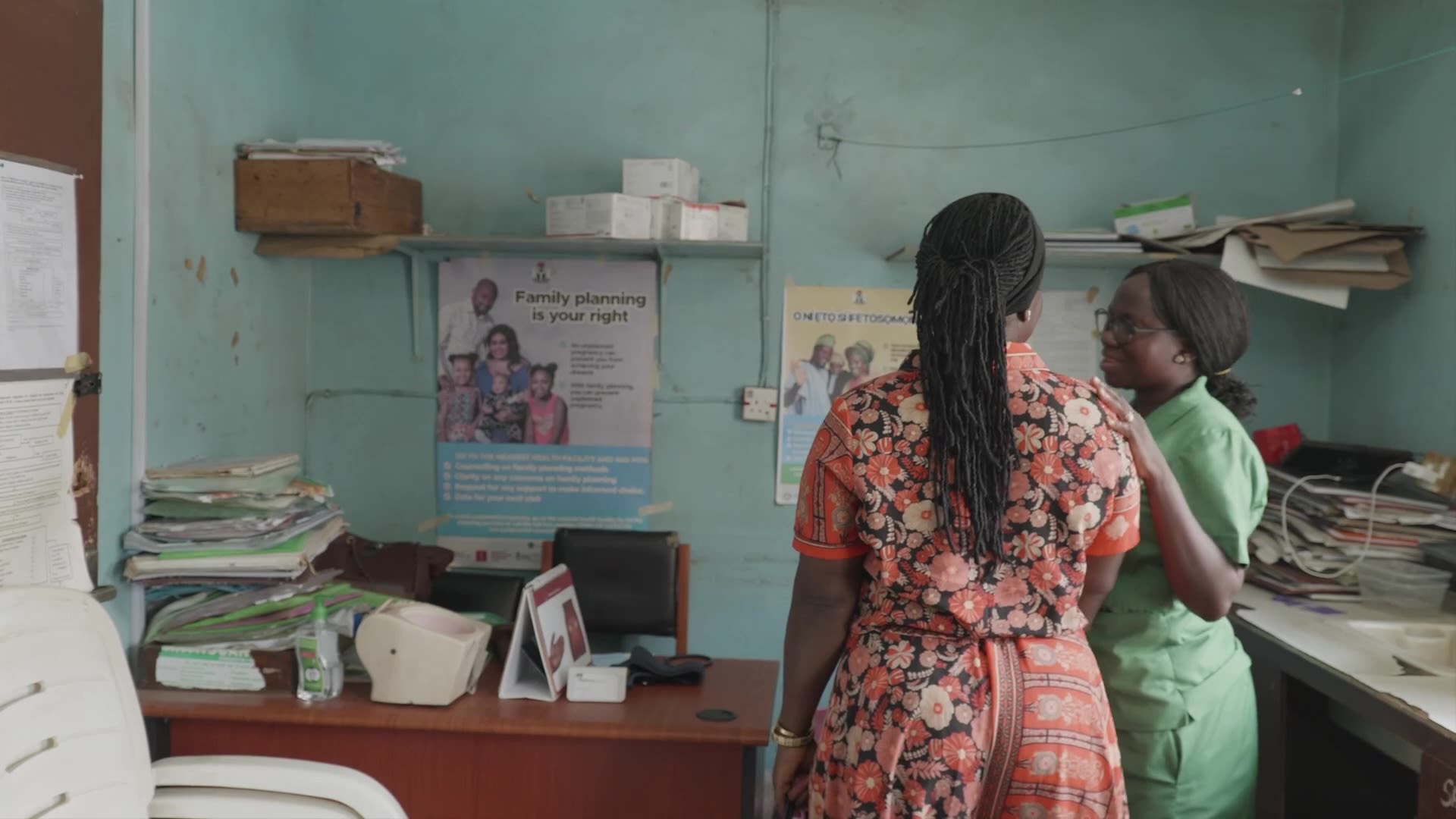
“It built my confidence in providing all the available family planning methods, short-acting and long-acting ones.”
Bisola and her colleagues learned how to provide in-depth counselling on contraceptive options, to ensure women could make an informed choice. Allowing time to speak with clients before providing a service has been important to assuage fears and bust myths.
“I saw one client who was told that a particular seed will work to prevent pregnancy for a year, so she swallowed five seeds. But of course, she became pregnant. I've had other women say they will take salt and water as contraception. It’s during our sessions that I’m able to erase these misconceptions and inform them properly.”
The training also tackled clinical quality like sterilising equipment, and best practices on keeping stocks plentiful. Bisola adds: “Without the partnership with MSI, we’d likely have a shortage of contraceptive commodities.”
This training isn’t a one-off course. MSI has been providing ongoing mentorship and supervision, ensuring trainees achieve hands-on, measurable skills and competencies over time.
The hospital is currently being supported by Taiwo, MSI’s training officer for Ogun State…
Taiwo
MSI trainer
Taiwo trains public healthcare providers like Bisola on how to provide quality reproductive healthcare. Her goal is that every person coming to a facility for a family planning service receives an exceptional standard of care.
“If I can leave the team with just one thing, it would be how to give quality care. Every time they provide a service, they should follow the guidance and put women at the centre of their own care – their body, their choice.”
She identifies and mentors master trainers: standout government healthcare workers who become local coaches themselves. They pass on their knowledge and skills in their area, so the learning continues at every turn.
At the moment, Taiwo is working with six master trainers. She has trained more than 120 people; her colleagues across Nigeria have trained more than 10,000.
As for her training style, she takes a very individual approach. Some are fast learners, and others need time to reflect on what they’ve learned. She adapts accordingly.
While the training focuses on quality contraceptive services, providers also learn how to deliver post-abortion care. This type of lifesaving medical intervention can be necessary when a woman has had an unsafe abortion, or a complicated miscarriage.
This stirs up a formative memory for Taiwo. When she was younger, her neighbour tried to end her own pregnancy without any medical support.
“She died,” said Taiwo. “Since then, I’ve wanted to know what to do to assist in that situation, to save a life. If I knew what to do, I could have helped her.”
Taiwo has gone one step further, and recently trained others on post-abortion care so they can save lives too.
She says many health providers shy away from providing post-abortion care, wrongly assuming it’s illegal or perhaps not knowing how to intervene. Since the training, they’re more confident and willing to support women with post-abortion care.
Taiwo is proud of the skillset she instils in others. “It gives me joy, seeing my service providers have enough confidence and competence to help women, to do the right thing.”
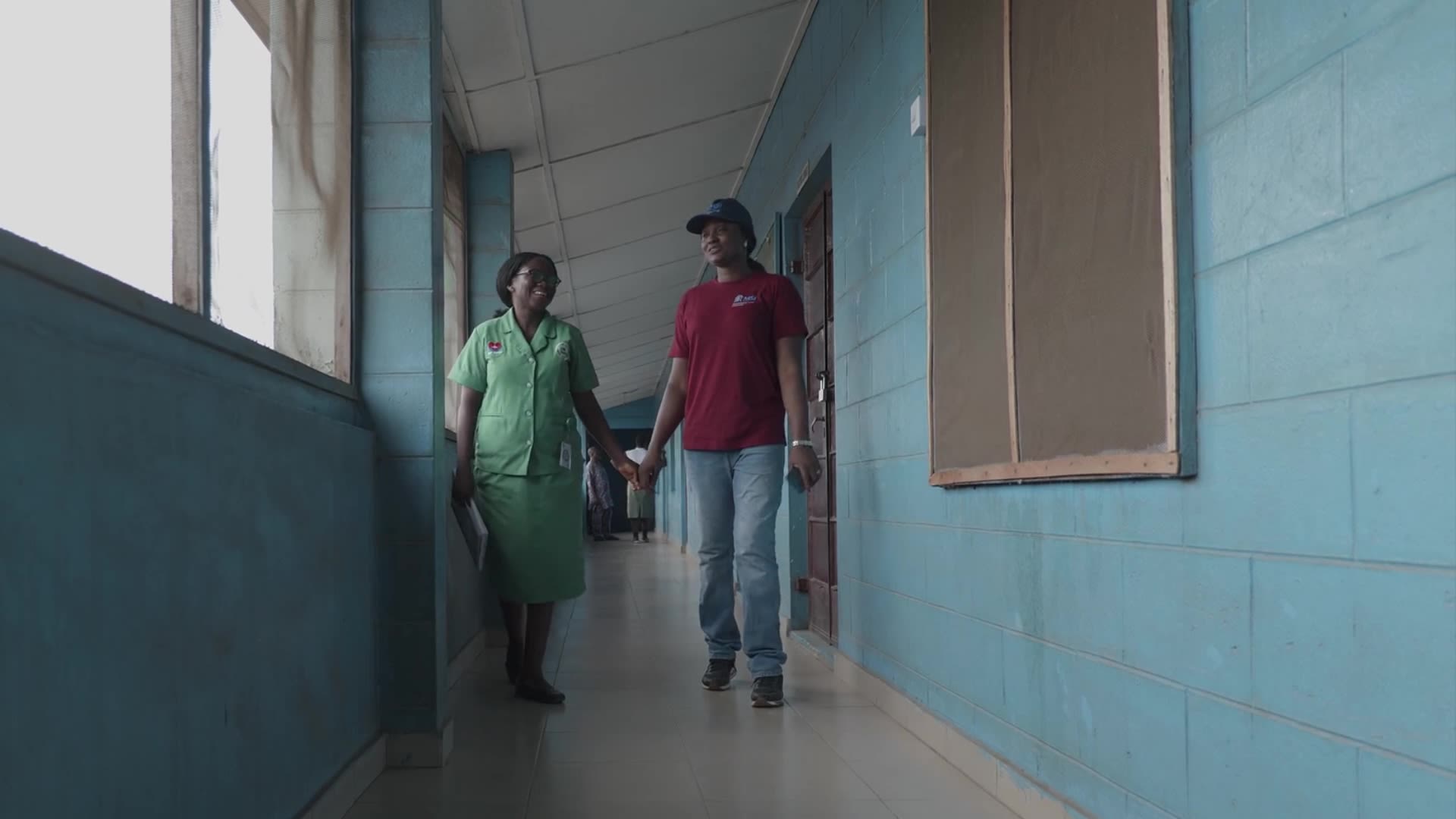
In the decade since MSI’s collaboration, they’ve seen an influx of clients. Women talk, and it didn’t take long for word to get around about the contraceptive services at the hospital.
Hairstylist and mother-of-two Wemimo – whom we met earlier – says she noticed the difference in quality. “The service I got was wonderful. I was treated with respect; we talked as if we are family,” she said, adding that she always comes back here for her care.
Taiwo, Bisola and Wemimo are all links in a chain of women supporting women.
Health providers are being trained, women are living life on their own terms, and the Nigerian health system is being transformed from the inside out.
“MSI increases our providers’ knowledge with on-the-job training. They give us new policies, trends and updates.
It’s important for MSI to work with us because the government cannot do it alone.”
Adelani Busirat, coordinator of government-led family planning across Ogun State, Nigeria
The bigger picture: How this partnership works across Nigeria
The story continues across Nigeria. This is the third riskiest country for a woman to be pregnant; her risk of dying is much higher than most other places in the world.
There remains an urgent need for quality contraception – in some states, the rate of modern contraceptive use (mCPR) is as low as 3%. Women and advocates across the nation are calling for better access.
The government is determined to address this healthcare gap, aiming for 27% of women to be using modern contraception by 2030. So, the question is how.
Partnerships like the one between the government and MSI are creating the answer in real time. Over 50 years of service delivery, MSI has learned what it takes to provide quality contraception and is now supporting the government to do the same.
Hands-on training – with ongoing support – is building competence, confidence and empathy in the health system. The government are embedding clinical quality and their own supervisory leaders.
Since MSI started this partnership in 2012, we’ve learned a lot along the way. With 242 million people in Nigeria and the fact that each state runs things differently, the health landscape has demanded that we work in varied ways and develop unique partnerships in each region.
Now, 3 in 4 of the people MSI Nigeria reaches with quality care are supported through this public sector approach – last year that was 3.6 million people. It costs MSI less than £2 ($2.50) for each woman we can support through the public sector to prevent a pregnancy for an entire year.
Women are finding more contraceptive options available, and more than half are choosing long-acting methods to suit their lifestyle. We’ve seen this in community after community.
It’s why we continue to scale up this approach. MSI is now supporting over 5,000 public facilities in Nigeria (20% of their facilities). The number of women accessing family planning services has tripled since the start of our partnership.
But you needn’t take our word for it.
An independent study of MSI’s public sector partnership
An assessment of this public sector approach in Nigeria was done by the Centre for Research, Evaluation Resources and Development (CRERD) and the Population Council, finding that MSI “significantly enhanced contraceptive availability and quality of care.”
In facilities we supported, family planning services doubled or tripled. And long-acting contraception such as IUDs and implants became the preferred method for many clients.
These positive effects remained even when MSI stepped away from hands-on support, thanks to the capacity building and support mechanisms put in place.
The researchers concluded that this approach has had “a transformative impact on reproductive health services in Nigeria.”
It’s clear this partnership is moving the needle on access to contraception, ensuring women will be able to rely on quality services locally in the future.
MSI’s government partnerships around the world
While Nigeria was one of our first and remains our biggest country programme working to strengthen the public sector, MSI has similar partnerships in 21 countries.
Communities and government leaders are driving this change while MSI teams are collaborating behind the scenes to make it happen. The long-term vision is that reproductive healthcare is nationally owned and provided, available to everyone, and of the best possible quality.
MSI has trained almost 15,000 government health workers across the world. We want to build on this momentum.
The investments we make now to put durable systems in place and set the standard for clinical quality and client-centred care will change the future of reproductive healthcare.
This work is for people interested in long-term, generational change – the kind that will outlive us. People who want to secure a future where everyone has the choices they deserve.
Do you want to be part of it?
£1500 can train a government healthcare worker to provide high-quality contraceptive services. We estimate they'll support at least 10,000 women and girls over 15 years of their career.
Donate to build long-term reproductive choice
Calculate your impact with our investment calculator
Contact our partnerships team
 Built with Shorthand