


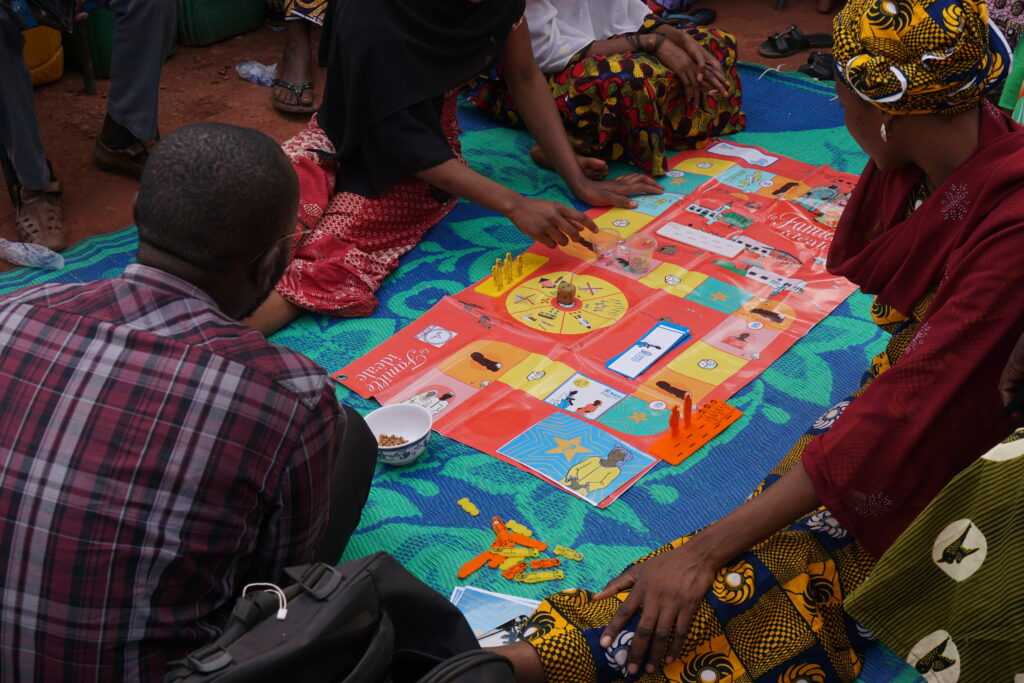
La Famille Ideale (LFI) is a suite of participatory tools for MSI community-based mobilisers, who help build community awareness and support for adolescent sexual and reproductive health and rights. The tools include a game and conversation-starting cards that aim to open-up conversations and encourage support for adolescent mothers in rural communities to access contraception.
Developed using human-centred design (HCD), initial piloting of the approach in Burkina Faso saw a 24% rise in adolescents reached by outreach teams where the tools were used to mobilise communities in advance of an MSI visit (and no change in adolescent reach where the tools were not used).
Qualitative insights from Senegal highlighted that the community discussion facilitated by La Famille Ideale helps to address and bust local myths and misunderstandings about family planning. The tools are an effective way to engage a range of audiences with the benefits of contraception and put this in the context of broader family aspirations and challenges (e.g. managing resources, sending children to school, maintaining a healthy relationship). Participating in La Famille Ideale can encourage conversations between couples and family members about contraception, which otherwise may not be happening, and may be needed to support women’s access to services. The discussions generated by the tools can start to challenge norms about who can use contraception, as well as when and how decisions about adopting a contraceptive method should take place.
La Famille Ideale has been integrated into community awareness activities across MSI’s Sahel programmes (Burkina Faso, Mali, Niger and Senegal). In Mali and Senegal, the tools have been endorsed by the government and integrated into national strategies and plans. Most recently, in Mali, the team have begun exploring how to leverage the positive discussion created by the community game to include broader gender themes of couples communication and inter-partner violence (IPV).