

Dr Mohsina Bilgrami shares what it was like establishing a reproductive health programme for Pakistani women and girls.
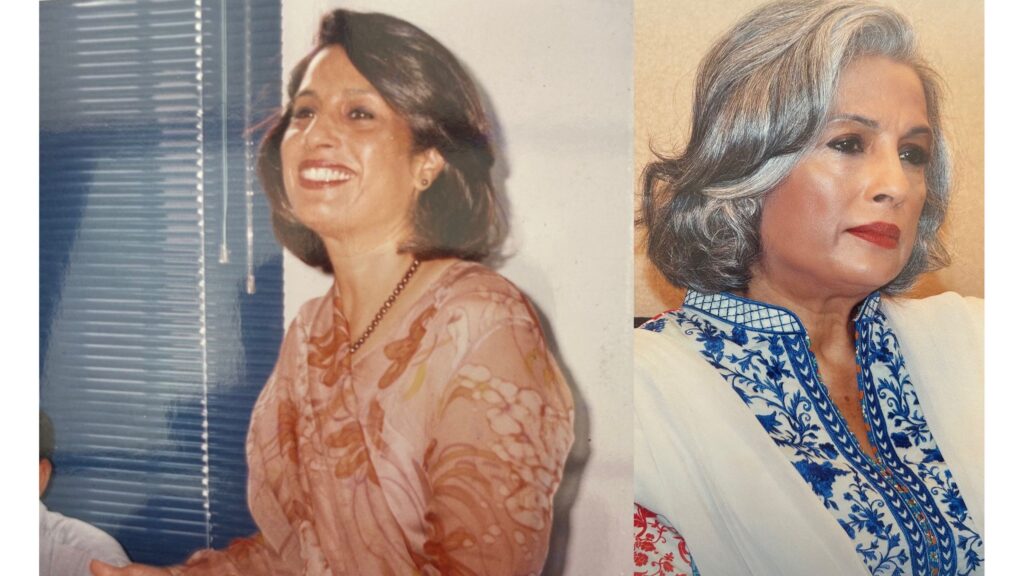
When the first MSI Reproductive Choices clinic opened in London in 1976, Mohsina Bilgrami was 5000 miles away, studying towards a medical degree in Pakistan. Unaware that this fledgling organisation would soon alter the course of her life and career.
It was in 1991 that Mohsina, now an accomplished doctor, met MSI’s founder Tim Black. He didn’t need to convince her of the importance of reproductive healthcare – her experiences providing community healthcare had made that abundantly clear.
“I realised what a big issue it was that women were having children that they hadn’t planned. When women asked me how they could have fewer children, I couldn’t answer. I didn’t know.”
Her medical schooling hadn’t covered family planning, so she sought out to learn this herself. The knowledge she gained became life-changing for her and her clients – suddenly she could offer answers, solutions, contraceptive methods. But this work was stifled by stigma. Many people didn’t accept it, and women and girls were suffering and even dying.
“A mother brought her teenage daughter into my clinic, complaining of a stomach tumour. But the girl didn’t have cancer, she was pregnant. There was not a single thing I could do except refer them to a local hospital. But I could see the terror in both of their eyes. Six weeks later, the mother was in my waiting room again. I asked about her daughter, not expecting her outpouring of grief. She told me her husband and sons had found out she was pregnant and killed her.”
The thought of this girl deeply affects Mohsina to this day. Why had she paid this price for a pregnancy she never intended? Mohsina decided she would do everything in her power to change this brutal reality for women and girls. Her part in this, she decided, was ensuring women and girls were in control of when they got pregnant.
When Tim Black first talked to Mohsina about her setting up a reproductive health programme in Pakistan, supported by MSI, it was music to her ears.
“I got started right away. Tim was always available for guidance, but I had no office, no clinic, no staff, no ‘this is how you set up a programme from scratch’ guidebook. I taught myself how to use a computer, and began working from my spare room. It was a little daunting, but mostly exciting! A UK guidebook wouldn’t have helped me much anyway. I was in Pakistan – this was an entirely different cultural reality, so I had to trust my instincts, my experiences and what I had learned in the field as a doctor. We had to find our own way to provide these services.”
The problem was that reproductive healthcare was not something that was valued, respected or understood in Pakistan. Mohsina was denied rental spaces because no one wanted to rent to a family planning organisation. And she found it hard to recruit people into this field. But she persevered and steadily built a team.
“Now MSI has the best clinical quality standards in the world; there’s support, structure, and best practices shared across countries. But back then, we were developing everything ourselves! There was so much innovation… manuals, systems, HR standards, quality standards. We were learning and finetuning approaches in real time. Oh, it was gratifying! We didn’t know how to write funding proposals but we did it anyway, not with pages of data, but with our hearts.”
Tim Black, and another foundational MSI team member Dr Tim Rutter, visited Mohsina throughout this time to provide mentorship – but more importantly, they enlivened her courage. She recalls how she was pushed to do things in her own way, and how she believed wholeheartedly in MSI’s big, unapologetic vision to bring reproductive choices to remote areas across the whole world.
Mohsina’s passion carried her through extreme situations. She was held at gunpoint not once but three times during her work, and managed to calmly negotiate her way to safety. “Being a doctor helped me in these situations, as people do tend to respect doctors and I was able to make sure they didn’t harm anyone around,” she said.
Travelling to remote areas as a woman also presented unique challenges. Once, she had to ask for a bed at a local government rest house – reserved for men – as there was no other accommodation. Luckily no visitors were there so they let her stay, until 4am when government officials were on their way, meaning Mohsina was unceremoniously tossed out.
Over decades, undeterred, Mohsina’s team grew MSI Pakistan cover most of the country. They’ve supported millions of women and girls with their reproductive health, transforming lives with the power of choice.
She went on to serve as a regional director for west Asia; her calm, resourceful nature helping her to oversee countries experiencing major conflict like Afghanistan. Mohsina retired in 2020, but to this day she remains a global board member. MSI will always be woven into her life and legacy; she proudly notes that if she had another life to live, she would do it all over again.
“After 30 years working for MSI, what comes most clearly to mind is the relief women felt when we offered them contraception. Many were desperate, and we gave them a clean, sympathetic environment, and let them make choices for themselves. This was rare. This was important. It still is.”
50 years of MSI Reproductive Choices
Read more about MSI’s five decades of delivering reproductive choice.
Reflections from MSI co-founder Jean Black
Jean is sharing how MSI began, taking us for a trip down memory lane.